In the world of reading, there’s more than one way to keep track of what you’ve read, what you loved, and what’s still waiting on your “To Be Read” list. There are multiple options, but my experience lies with three of them. There are digital options such as StoryGraph or Goodreads, while you could also stick to the timeless, low-tech option of a handwritten reading journal. Some people choose not to keep track at all, keeping their TBRs and list of books read in their heads. These people are obviously crazy and we’re not going to talk about them. We don’t need that kind of negativity in our lives. Each option has its own appeal, depending on whether you seek data, community, or creativity.
StoryGraph
StoryGraph is relatively new, created in 2019 as an independent alternative to the Amazon based Goodreads. However, it has become popular with people who like facts and information. It tracks your reading statistics over time, provides an overview of your long-term reading habits and lets you build a TBR list, set challenges for yourself, and participate in challenges made by other people. StoryGraph uses your reading habits and preferences to deliver highly personalized recommendations.
When you read a book, it lets you rate in quarter star increments. 1 star, 1.25 stars, 1.5 stars, etc... Over time, StoryGraph generates charts that show your reading patterns such as how many pages you’ve read, which genres you gravitate toward, your most read authors, among other stats. It’s very data-driven which is something I did not even know I would enjoy when I started using StoryGraph in 2022 but would now be lost without.
There’s also a simplicity to StoryGraph’s design. It’s ad-free, privacy-respecting, and not tied to Amazon, which is important to some people. Its social features are very minimal, which is a con for some people who enjoy making reading more social and a non-issue for those that want to focus on their own reading, like me. Because StoryGraph is a smaller app, the makeup of reviews is much different than Goodreads' massive community, and some lesser known, independent books may have to be added to their database yourself. Which is not a huge issue but has happened to me and was mildly annoying.
Goodreads
Goodreads has been around since 2007 and has become the largest online community for readers. Owned by Amazon, it offers an extremely large database of books, reviews, author pages, and discussion groups. The platform makes it easy to keep track of what you’re reading, rate books, and see what books everyone else is enjoying. There are also challenges galore to partake in, if that’s your thing. Goodreads also gives you data on your reading, but not in the depth and detail of StoryGraph.
Its greatest strength in comparison to other apps lies in its community. Because it is owned by Amazon, its community is simply massive. If you love reading reviews, joining book clubs, or seeing book buddies’ progress in real time, or for that matter...finding book buddies and making reading social, Goodreads delivers that sense of connection and community. If you have a Kindle, it will also automatically sync all of your reading activities directly to Goodreads for you.
However, Goodreads, despite its size and popularity, is not perfect. There is a lot going on with Goodreads, and it can feel overwhelming. The star rating system is limited to whole numbers, and recommendations often feel driven more by popularity than by true personalization. Still, for many readers, it is a comforting option that has been available for a long time; communities have been built and friendships made.
Journal
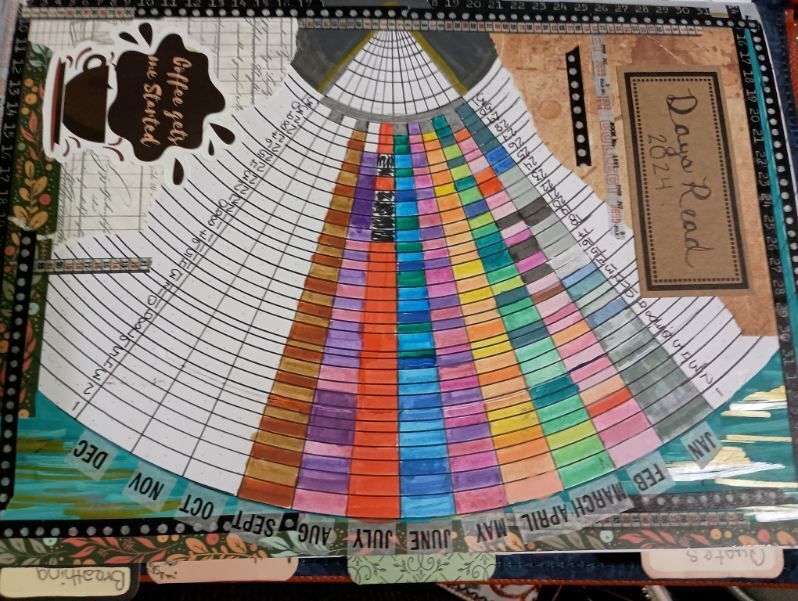
If that level of community seems unappealing, or the thought of having to log into an app to track reading seems overwhelming, then there’s the simplest option, a reading journal. Whether it’s a dedicated notebook, a bullet journal spread, or even an Excel spreadsheet, keeping track of your books by hand allows you to make this option into exactly whatever you want it to be. There is no option that allows for more personalization than a reading journal.
A reading journal isn’t just about making a list. You can jot down quotes, sketches, emotional reactions, create your own challenges, or even rate books however you want. Get rid of the star system, you can come up with whatever wackadoo rating system your imagination can create. It can literally be whatever you want it to be, as minimalistic or maximalist as you want. One year I decided to add a section for writing reviews, decided after a couple of months that I hated writing reviews as it felt too much like homework, and I’ve never added anything to do with reviews since. There’s no algorithm or pressure to share—just the joy of engaging with books in your own way. It’s slower and potentially more labor intensive, yes, but that’s part of the magic. My own reading journal is a little extra, because that is my personal preference.
The Verdict
StoryGraph appeals to the analytical reader. Goodreads caters to the social reader. A reading journal delights the creative and introspective reader. None is inherently better; they all reflect different ways of connecting with stories. In the end, you don’t have to choose just one. I use both StoryGraph and a reading journal to track, and I also frequently use Goodreads to find reviews on books before adding them to my TBR. However you do it, what matters most is not how you track your reading, or if you track your reading, but that you keep reading at all.